Pages

Showing posts with label CKPhysio. Show all posts

05 September 2020

Using Tens Physiotherapy Treatment Pain Conditions


TENS is a kind of electrotherapy. It stands for Transcutaneous Electrical Nerve Stimulation, and it is the most common type of physiotherapy treatment used for pain management. 

It usually consists of a small, battery-powered device similar in appearance to an old cassette walkman, which attaches to the site of pain through electrode pads. It’s an easy and effective treatment for chronic and acute pain that physiotherapists can use, prescribe and educate patients on using themselves. Read more here: https://bit.ly/31MZGM5 

20 August 2020

What is Electrotherapy Treatment and How Does It Work


When you hear the term “electrotherapy” it may at worst bring to mind images of people with a mental health condition undergoing traumatic electroshock treatments to the brain, or Frankenstein’s monster being brought to life. 

However, far from these Hollywood induced nightmares, electrotherapy is a gentle and harmless treatment method used by physiotherapists to help repair soft body tissues and alleviate pain. Read more here: https://bit.ly/2FxToqZ 

31 July 2020

FAQs to Physiotherapists: Is Manipulative Therapy Effective?


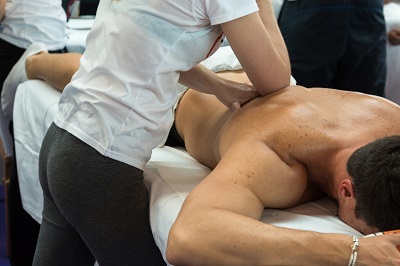
If you’ve ever visited a physiotherapist the chances are that they’ve used some form of manipulative therapy to treat your ailment. Whenever a therapist uses their hands to massage, pull, push, knead, or otherwise touch a patient, they’re using manipulative therapy techniques. Read more here: https://bit.ly/39CzAxE

27 June 2017

3 WAYS A PHYSIO SPECIALIST CAN HELP YOU RECOVER FROM A SOFT TISSUE INJURY


All of us suffer from soft tissue injuries, from time to time, but not everyone knows the importance of recovering correctly and how to do this.

By paying closer to attention to your recovery, after you’ve been injured, you can prevent future re-injuries and speed up your rehab time so you can get back to doing the things you love.

Here are 3 ways a physio specialist can help move your recovery from a soft tissue injury in the right direction. They Can Offer Advice Specific to Your Situation

Not all soft tissue injuries are the same and not every person will respond the same to a specific treatment. If you are simply googling treatments and “how to” advice, you might not know all of the right questions to ask. When you have access to a trained physiotherapist, you get the kind of specialized advice that can help you recover safely and correctly. Read more from this blog. http://bit.ly/2tLF32Z

12 June 2017

THREE WAYS PHYSIOTHERAPY CAN EASE THE SYMPTOMS OF SCIATICA


Anyone who is suffering with or has suffered from sciatica knows that it can be severely painful.

This condition is usually caused by a herniated disc in the spine that presses against nerves, but it also can be the side effect of bone spurs, spinal stenosis, arthritis, or pinched nerves. The pain from this condition can radiate down your lower back to your buttocks and all the way down the back of your leg. It can also make your leg go numb or tingle and cause muscle weakening in both the leg and foot.

Many people seek out physiotherapy to help treat sciatica, and here are 3 ways that it might of help. Read more on this article. http://bit.ly/2ssU1qH

24 May 2017

Avoid Running Injury With These Four London Physio-Approved Tips


As a running enthusiast, you’re probably in a constant state of preparation for your favourite marathon. As you up your running loads and distances, you need to protect yourself from common running injuries such as runner’s knee, shin splints, Achilles tendinitis, and plantar fasciitis. With good running technique, appropriate training progressions, and proper fitting shoes, you can avoid most of these injuries.

London Physio Shares Four Injury-Preventing Tips for Marathon Runners

If you are planning to run in any marathon this year, your London physio provider shares with you four injury-preventing tips to keep in mind as you prepare for the big day.

Increase your load gradually

The rule of thumb in training for a marathon is to raise your total running volume in increments of just 10 per cent each week. This gives the body tissues just the right amount of load to adjust to. Pushing yourself too much in too short a time can often result in injuries such as shins, anterior knee pain, or Achilles tendon. Read more from this article: http://bit.ly/2rFQacJ

12 May 2017

Physiotherapy Helps Stroke Survivors Attain Complete Rehabilitation


Survivors of stroke can benefit significantly from accessing physiotherapy as it supports effective recovery.

Find Out How Physiotherapy Supports the Recovery of Stroke Survivors

Physiotherapy will help you improve movement and strength by learning how to use both sides of the body once more. Here’s how physiotherapy can help you recuperate from the effects of stroke and what treatment methods may be applied.

How Physiotherapy Supports Neuroplasticity

Stroke can affect either the right or left hemisphere of your brain. Right-hemisphere stroke can lead to left-sided paralysis or weakness, visual problems in the left eye, and memory problems. Left-hemisphere stroke can produce right-sided weakness or paralysis, speech problems, visual problems in the right eye, impaired mathematical or reasoning abilities, and memory deficits. Read more from this article: http://bit.ly/2qmrAJH

25 April 2017

PRACTICAL AND COST-EFFECTIVE PHYSIOTHERAPY TECHNIQUES FOR JOINT AND SOFT TISSUE PAIN


When talking to your physiotherapist, they’ll come up with a massage treatment that is catered to your specific needs. Not only do they help cure physical pain, but they can increase muscle flexibility, improve your mental well-being, and strengthen your immune system.

For thousands of years, physiotherapy has existed in some form or another. It’s specifically designed to treat those suffering debilitating conditions, whether they were caused by accident or disease. This branch of medicine also incorporates innovative techniques, which have proven to be effective for many soft tissue and joint pains. Here are some of them. 

Muscle Energy Techniques

If your joints and soft tissue are experiencing pain, muscle energy techniques may be recommended. These involve patients gently flexing and relaxing particular muscles as directed by a physiotherapist. Sometimes, the specialist applies counterforce to facilitate the healing process. Other times isotonic eccentric contractions are used, involving tissues being stretched slowly during a contraction. Read more from this blog: http://bit.ly/2oI0QBO

11 April 2017

SOME HEALTH PROBLEMS AN EXPERIENCED PHYSIO CAN TREAT NATURALLY


Many people suffer spinal problems caused by damage to the vertebrae, ligaments, or disks of the spinal column. Symptoms range from minor aches to debilitating pain, limiting people’s ability to live normal lives. This highlights the importance of getting physiotherapy treatments as soon as your spine starts acting up.

More and more physiotherapy centers are popping up worldwide. That’s because these centers treat a wide variety of conditions to help men and women of all ages with mobility and impairment issues. Here are some injuries that physiotherapy can help treat.

Spinal Problems

A stiff or sore neck, in particular, is commonly associated with spinal problems. Your body will adjust to make joints and muscles compensate for this pain - at least for a short period. A physiotherapist will provide long-term treatment to manage neck pain effectively. Read more from this blog: http://bit.ly/2oI0Phe

17 March 2017

A Physio Hastens Recovery After Being Sidelined from a Tennis Injury

The majority of tennis players will experience an injury at some point in their careers, whether they play professionally or for fun. Although you can take steps to prevent damage, such as warming up and cooling down effectively, sometimes injuries can’t be prevented.

How a Physio Treatment Returns you Back to Action on the Court in a Short Time

If you’ve experienced a sudden injury while playing tennis, you’ll likely know that the recommended course of action is PRICER (protection, rest, ice, compression, elevation and rehabilitation). But what does that final step look like for those who have a tennis injury?

Read more on this article: http://bit.ly/2mHd9gL

10 March 2017

The Hidden Positive Effects of Physiotherapy You Should Know About

There are many reasons people seek the services of a physiotherapist. They may be experiencing pain or limited function in their joints that affects their mobility. Though these are common reasons to initially start physiotherapy, there are many other positive side effects that can make it even more worthwhile for you.
You May Be Surprised by Some of the Healthy Benefits of Physiotherapy to the Body

Following are three less-known benefits of physiotherapy that might surprise you.

Physiotherapy Rudiments Can Make Your Digestive System Work Better

You’ll Sleep Much Better

Pain or restriction in movement can interfere with your sleep by not allowing you to sleep in a comfortable position. Physiotherapists aim to restore movement and function through exercises and techniques that strengthen the muscles and joints. After a regular regimen of said exercises and physiotherapy, you will find your natural agility and mobility restored.

Read more on this article: http://bit.ly/2n5GJ38

19 January 2017

Physiotherapy Treatment Addresses Muscle Imbalance and Poor Posture

Physiotherapy offers treatment options for various physical conditions in a therapeutic and preventative capacity. The correction of muscle and posture imbalances is one of the areas that a physiotherapist can help with. There is a myriad of factors influencing posture and most people don’t think much about them until their problems become severe.

 Alleviating Muscle Imbalance and Poor Posture of Clients

 To ensure an upright position, a host of biological systems that work together determines an individual’s posture. Muscle imbalances are closely related to posture problems and occur when some sections of the body develop tighter muscles than others.

Read more on this article: http://bit.ly/2iHbPIH

18 January 2017

Embracing Hands-On Treatment Methods: Advancements in Physiotherapy


There is no doubt that Ealing physiotherapy clinics are now offering some truly cutting-edge treatment options to those who are recovering from an injury or surgery.

 Research, however, shows that more proactive treatment options can vastly decrease overall recovery times. In the past, many physiotherapists would rely upon techniques such as ultrasound and electrical stimulation to ease pain and begin the healing process.

 Whilst these are indeed effective at addressing symptoms, they normally do not tackle the root of the issue such as a pinched nerve or scar tissue.

Read more on this article: http://bit.ly/2jxHccR

21 April 2014

On Parkinson's Disease and Physiotherapy

Parkinson's Disease is an ailment that inhibits body functions. This is caused by the failure of the brain to swiftly deliver information to the different body parts for movement. The slow transfer of signals from the brain to the body causes mobility problems and speech concerns. Parkinson's Disease has no known cure to-date. However, physiotherapy is seen as one of the more common ways to alleviate the symptoms of the ailment.

With limited mobility and poor body functions, the joints and limbs of a person suffering from Parkinson's become weaker. Physiotherapists can massage and treat the arms and legs of the patient, increasing the strength of the muscles and making sure that the arms and legs can still move.

26 February 2014

Physiotherapy as Treatment for Arthritis

Arthritis is commonly characterized by joint pains and mobility problems. This ailment causes muscle pain, limited flexibility, and other internal problems that inhibit a person's movement. Due to the persistent pain associated with the condition, people who suffer from arthritis may find it hard to walk, move their limbs, or even use their hands.

10 February 2014

Physiotherapy for Tennis Elbow

Is there pain slowly increasing on the outside of your elbows? Does the pain get worse when you shake your hands or tighten your grip? Are simple tasks like brushing your teeth, opening jars, and using a knife or a fork difficult because of the pain? If you answered yes to any of these questions, you might have a tennis elbow or lateral epicondylitis.